

Industrial Pumps for the Oil and Gas Industry in the Middle East and Africa
The Ultimate Guide to Oilfield Pump Systems, Technologies, and Selection
Oil and gas production environments are among the most demanding industrial sectors for pumping equipment. Across upstream oilfields, offshore platforms, refineries, and petrochemical plants, operators rely on industrial pumps for oil and gas operations to transport complex fluids under extreme operating conditions.
Typical oilfield fluids contain high-viscosity hydrocarbons, solids, gas bubbles, abrasive particles, and corrosive chemicals. In addition, pumping systems often operate in high temperatures, high salinity environments, and remote locations where maintenance access is limited.
For this reason, selecting the correct oilfield pump system is a critical engineering decision. An incorrectly selected pump can lead to:
- unstable flow conditions
- premature equipment wear
- excessive energy consumption
- production downtime
- environmental risks
In the Middle East and Africa (MEA), where many oilfields operate under harsh climate conditions and high production volumes, reliable pump systems are essential for maintaining stable operations.
This ultimate guide explains:
- the role of pumps in oil and gas operations
- key technical challenges when pumping oilfield fluids
- the most commonly used pump technologies
- typical oilfield pump applications
- pump selection criteria for engineering teams
- real industrial pump installations worldwide
The Role of Pumps in Oil and Gas Operations
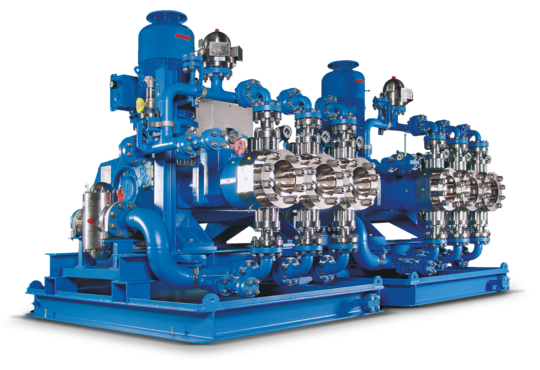
Pumps are essential components in nearly every stage of the oil and gas value chain.
From upstream oil extraction to refining and petrochemical processing, pumping systems ensure continuous fluid transport between processing stages.
Typical oilfield pumping applications include:
- crude oil transfer between separators and storage tanks
- pumping oil-water emulsions
- hydrocarbon condensate transfer
- drilling mud circulation
- produced water handling and treatment
- polymer injection for enhanced oil recovery (EOR)
- chemical dosing systems
- sludge and oily waste transfer
- tank cleaning operations
- centrifuge and hydrocyclone feed systems
These processes require pumps capable of handling:
- viscous hydrocarbons
- multiphase mixtures
- abrasive solids
- corrosive liquids
Traditional centrifugal pumps are often unsuitable for these conditions. As a result, many oilfield facilities rely on positive displacement pumps, particularly progressive cavity pumps and screw pumps, which maintain stable flow regardless of fluid viscosity.
You can explore industrial pumping technologies available at SPELS here
Typical Oil & Gas Pumping System
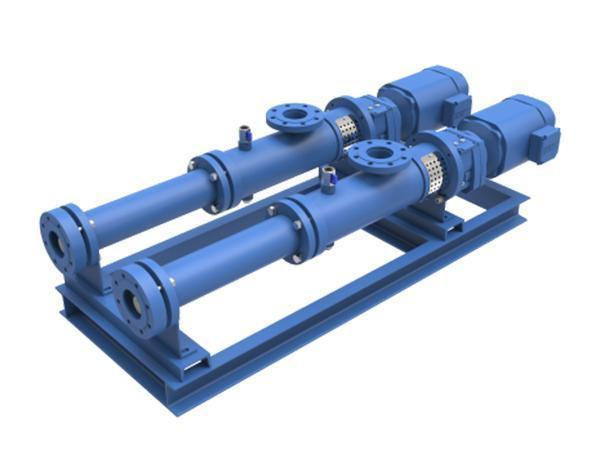
In oilfield facilities, pumps are typically integrated into fluid handling systems connecting separators, storage tanks, and downstream processing equipment.
Simplified pumping system layout
A typical system includes:
- suction pipelines connected to crude oil separators
- pump units capable of handling viscous hydrocarbons
- discharge lines feeding processing equipment
- instrumentation such as pressure gauges, flow meters, and safety valves
These systems must maintain stable flow rates even when fluid composition changes due to gas content, solids, or temperature fluctuations.
Key Challenges When Pumping Oilfield Fluids
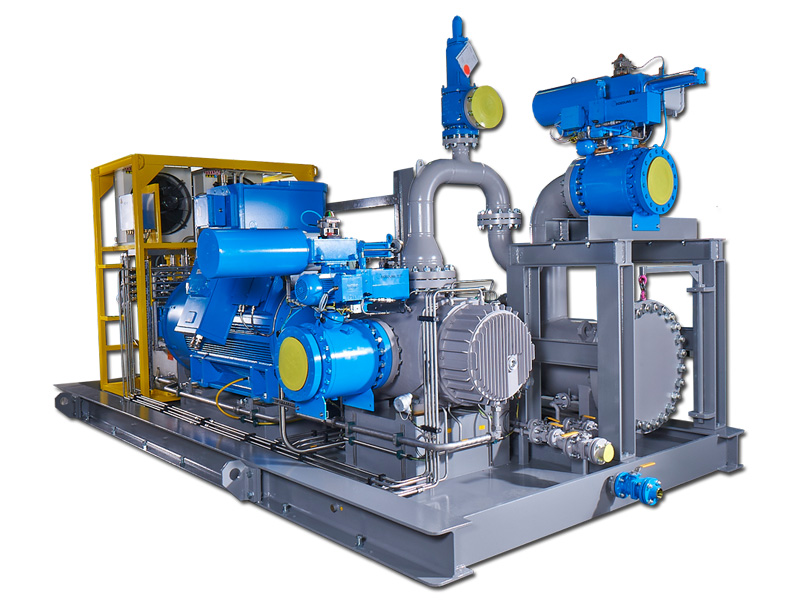
Oilfield pumping systems must operate under conditions that are significantly more demanding than most industrial applications.
High-Viscosity Fluids
Crude oil, heavy oil, and oil sludge may reach extremely high viscosity levels. Pump systems must maintain stable flow while avoiding excessive energy consumption or cavitation.
Multiphase Flow
Oilfield fluids often contain mixtures of oil, water, and gas, which can disrupt the operation of many pump types.
Abrasive Solids
Drilling mud, sand, and cuttings can cause severe wear on pumps not designed for slurry applications.
Corrosive Environments
Produced water and process chemicals may contain chlorides, acids, and other aggressive substances. Materials must comply with NACE MR0175 corrosion standards.
Reliability in Remote Locations
Offshore platforms and remote oilfields require equipment with long service intervals, since maintenance access may be limited.
These challenges are why oilfield facilities often rely on progressive cavity pumps and screw pumps, which provide stable flow even in difficult conditions.
Progressive Cavity Pumps in Oil and Gas Applications
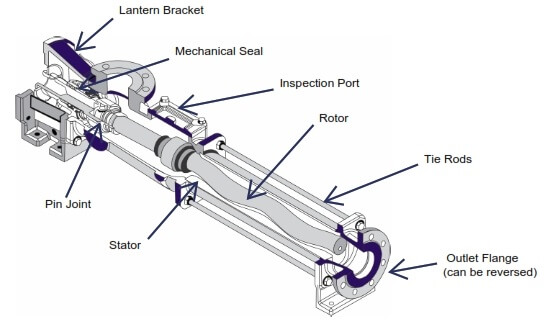
Progressive cavity (PC) pumps are widely used in oilfield applications because they can handle viscous fluids, solids, and multiphase mixtures.
Unlike centrifugal pumps, progressive cavity pumps move fluid through a sequence of sealed cavities created between a rotor and stator.
This design allows them to maintain consistent flow independent of viscosity.
Key advantages
- stable flow regardless of viscosity
- excellent solids handling capability
- low shear pumping action
- precise metering capability
- high efficiency at low rotational speeds
Because of these characteristics, progressive cavity pumps are commonly used for:
- crude oil transfer
- produced water pumping
- drilling mud circulation
- sludge and emulsion handling
- polymer injection systems
Screw Pumps for Viscous Hydrocarbons
Another important technology in oilfield operations is the screw pump, which provides smooth and continuous pumping of viscous liquids.
Screw pumps are commonly used for:
- heavy crude oil transfer
- refined oil products
- fuel transfer systems
- lubrication oil circulation
Learn more about screw pumps for viscous hydrocarbons and oil products
Typical Oilfield Pump Applications
Industrial pumps are used across multiple oil and gas processes.
Crude Oil Transfer Pumps
Crude oil transfer pumps move hydrocarbons between separators, storage tanks, and export pipelines. Progressive cavity pumps and screw pumps are commonly used due to their ability to handle viscous fluids.
Produced Water Pumps
Oil production generates large volumes of produced water containing hydrocarbons and solids. Pumps must provide reliable operation while resisting corrosion and contamination.
Drilling Mud Pumps
Drilling fluids contain abrasive solids that require pumps capable of handling slurry mixtures.
Polymer Injection Pumps
Enhanced oil recovery processes require accurate dosing of polymer solutions and chemicals.
Sludge and Waste Transfer Pumps
Oilfield sludge and emulsions require pumps capable of handling thick mixtures containing solids and hydrocarbons.
Pump Selection Guide for Oil & Gas Applications
Selecting the correct pump depends on fluid properties and operating conditions.
| Application | Fluid Type | Recommended Pump Type | Key Advantages |
|---|---|---|---|
| Crude oil transfer | Medium to high viscosity hydrocarbons | Progressive cavity pump | Stable flow |
| Produced water | Water with hydrocarbons and solids | Progressive cavity pump | Solids handling |
| Drilling mud | Abrasive slurry | Progressive cavity pump | Slurry tolerance |
| Polymer injection | Chemical dosing | Metering pump | Accurate dosing |
| Sludge transfer | Highly viscous mixtures | Progressive cavity pump | Reliable pumping |
| Fuel transfer | Clean hydrocarbons | مضخة لولبية | Smooth continuous flow |
Materials and Standards for Oilfield Pumps
Oilfield pumps must comply with strict international standards.
Key industry standards
- API 676 – rotary positive displacement pumps
- API 682 – mechanical seal systems
- NACE MR0175 – corrosion-resistant materials
- ISO / ASME standards – design and testing
Typical materials used
- duplex stainless steel
- stainless steel 316 / 316Ti
- nickel alloys such as Hastelloy
- titanium for extreme corrosion resistance
Elastomers used in stators and sealing components include:
- NBR
- EPDM
- H-NBR
- FPM
These materials ensure reliable operation in corrosive environments common across the MEA region.
Maintenance and Pump Reliability
Unexpected pump failure can lead to major operational disruptions.
Common causes include:
- rotor or stator wear
- seal failure
- abrasive particle damage
- improper pump selection
Preventive maintenance and access to pump spare parts such as rotors, stators, mechanical seals, and repair kits are essential.
Explore pump spare parts and components here
Real Industrial Pump Installations
Progressive cavity pumps have been successfully implemented in numerous oil and gas projects worldwide.
Examples include installations in:
- heavy oil treatment plants in Canada
- refinery hydrocracker systems in Europe
- offshore platforms in the North Sea
- oil production facilities in Venezuela
These projects demonstrate the reliability of progressive cavity pumps when handling crude oil, emulsions, and drilling fluids.
How to Select the Right Pump for Oilfield Applications
When selecting a pump for oil and gas operations, engineers must evaluate several parameters:
- fluid viscosity
- solids content
- gas entrainment
- operating pressure and flow rate
- temperature conditions
- installation environment (onshore or offshore)
- corrosion resistance requirements
Engineering support is often required to ensure that the pump system operates efficiently and reliably.
Engineering pump selection assistance is available here
Oil and Gas Pump Solutions for the MEA Region
The Middle East and Africa remain among the most important oil-producing regions in the world.
Operators in this region require robust pumping systems capable of operating under extreme environmental conditions, including high temperatures, high salinity environments, and heavy crude processing.
By selecting pumping technologies specifically designed for oilfield applications, companies can improve operational reliability and reduce maintenance downtime.
If you are looking for industrial pumps for oil and gas operations, SPELS engineers can help select the optimal pump solution for your application.
Contact the SPELS team to discuss your project
FAQ
Common pump types include progressive cavity pumps, screw pumps, and metering pumps depending on the fluid properties and operating conditions.
API 676 defines requirements for rotary positive displacement pumps used in oil and gas services.
They maintain stable flow when pumping viscous fluids, solids, and multiphase mixtures.